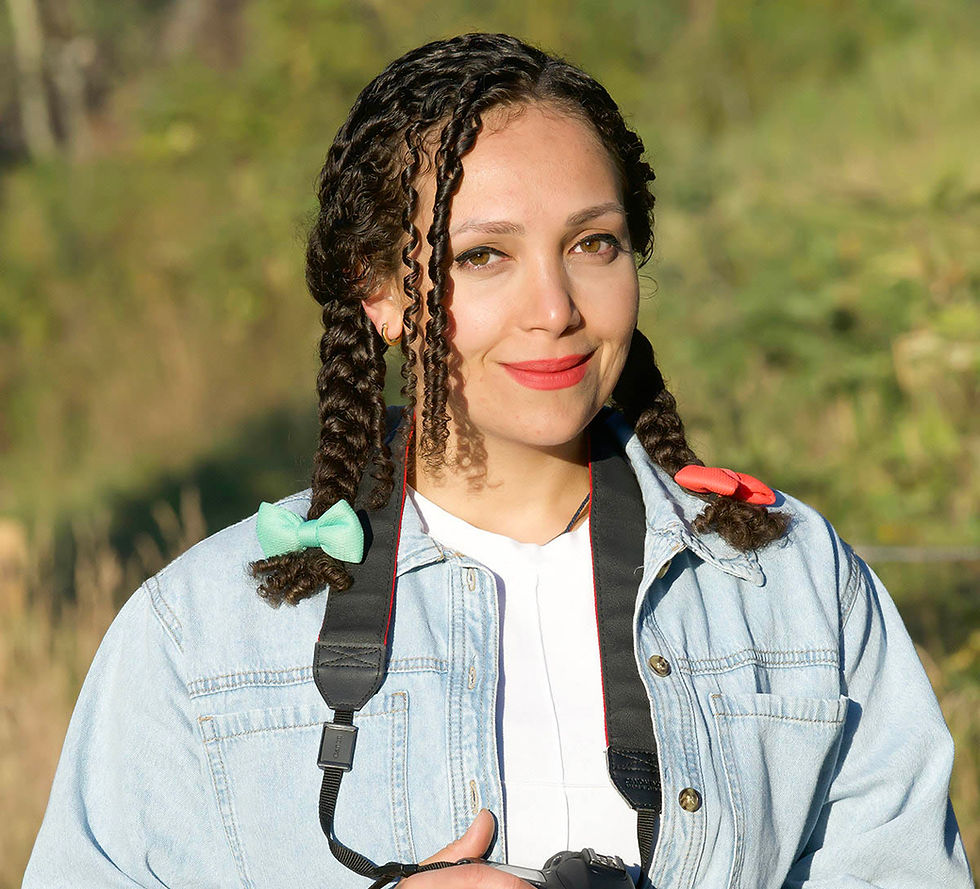
Manuela Federl
- Nov 29, 2025
- 2 min read
Updated: Nov 30, 2025
Manuela Federl is a documentary photographer focusing on marginalized communities.

• If your photography could speak, what would it say about you?
"Only when she has truly understood someone, their story, their life, their feelings – only then can she take a good photograph. She always tries to ask questions and understand first, and only then takes the pictures."
• Is there a place or environment where you feel most yourself as a photographer?
No, I can settle into a new environment incredibly quickly and feel at home in no time. However, it is crucial that the people I photograph also enjoy working with me. For me, that is the decisive factor in whether I feel comfortable or not.
• What is the most meaningful photo you have ever taken, and why?
My father had a stroke and was in hospital for 57 days before he died. I tried to capture the feelings I had during that time – grief, anger, fear – in photographs. This series, which I called "57 Days", means a great deal to me today.
• If you could describe your photography in one feeling, what would it be?
Truthfulness would be the word I would choose.
• From the photographs exhibited in Decagon, is there one that holds personal meaning for you?
Every picture I submitted to Decagon has a deep meaning for me because there is always a story behind it. I associate my series ‘The Roma Princesses’ with each of my visits to the slum. They remind me of many beautiful, but also unpleasant moments.

The photo of the electronic waste dump in Agbogbloshie reminds me of my time in Ghana, how I waded through the dirty mountains of rubbish in my clean trainers and was horrified at how people could work there.
Or my picture of Buni – the old woman in Romania – who was almost blind, cared for her sick son and whose entire income came from selling her cow's milk.
Each of my pictures has a meaning for me.